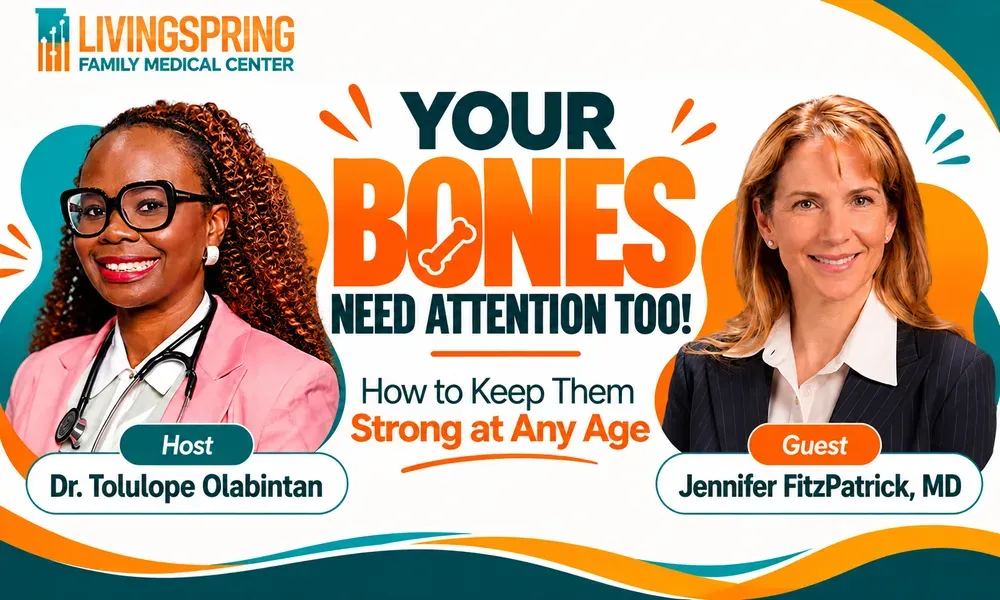
Your Bones Need Attention Too! How to Keep Them Strong at Any Age
Strong bones are not just about avoiding fractures. They are about protecting your independence, mobility and ability to enjoy life as you grow older.
Let's talk about your bones.
When was the last time you thought about your bone health? Not because you fell, not because you broke something, and not because your doctor raised a concern. I mean, when was the last time you deliberately thought about what you are doing today to keep your bones strong for tomorrow?
For many of us, bone health is one of those things we don't pay much attention to until something goes wrong.
We think about our blood pressure. We monitor our blood sugar. We pay attention to our weight, our heart and sometimes even our sleep. But our bones? We often assume they will just keep doing their job.
Well, your bones need attention too!
And here's something important: you cannot always feel your bones becoming weaker.
During one of our Tete-a-Tete conversations, I had the pleasure of speaking with Dr. Jennifer FitzPatrick, a board-certified, fellowship-trained orthopaedic surgeon specialising in sports medicine, about bone health and what we can do to remain strong and active at every age.
Dr. Jen is passionate about helping people stay strong for life. And I particularly loved her perspective that ageing and fragility do not have to go hand in hand.
In fact, she believes ageing should be an opportunity to reinvest in our strength.
We discussed bone loss, osteoporosis, menopause, nutrition, exercise, risk factors, bone density testing and some practical things you can start doing right away.
So, let's get into it!
1. Your Bones Can Become Weaker Without You Knowing
One of the most surprising things Dr. Jen shared is that you cannot necessarily feel your bones weakening.
Unlike high blood pressure, where you can monitor changes with regular measurements, declining bone density often happens quietly.
You may go about your daily activities without any obvious symptoms until you experience a fracture.
And sometimes, the incident that causes the fracture is not even dramatic.
A fall from standing height, a minor accident or simply lifting something may be enough to cause a fracture in someone whose bones have become fragile.
This is why understanding your risk factors is so important.
Dr. Jen explained that there are some warning signs that may indicate an underlying bone problem, including:
-
Gradual loss of height.
-
Developing a hunched posture, particularly in the upper back.
-
New or unexplained back pain, especially after lifting something.
-
A fracture following a relatively minor fall or everyday activity.
A hunched posture can sometimes be associated with compression fractures of the spine.
However, these signs do not automatically mean you have osteoporosis. They are reasons to seek medical assessment.
The bigger lesson is this: don't wait for a broken bone before you start thinking about your bone health.
2. Who Is at Risk of Weakening Bones?
Osteoporosis is a condition in which bones become less dense and more fragile, increasing the risk of fractures.
Before osteoporosis develops, a person may have osteopenia, a condition characterised by bone density that is lower than normal but not low enough to meet the diagnostic threshold for osteoporosis.
Some people are more likely to develop these conditions than others.
Dr. Jen highlighted several risk factors worth knowing.
Family history
Your family history matters.
Dr. Jen shared that osteoporosis and fractures had affected both of her grandmothers.
One grandmother experienced a spinal compression fracture after picking something up in the laundry room in her sixties. The other suffered a hip fracture and never fully recovered.
These experiences demonstrate why family history should not be ignored.
If osteoporosis or fragility fractures run in your family, discuss your risk with your healthcare provider.
Smoking
We often associate smoking with lung disease and cardiovascular problems, but smoking also affects bone health.
It can interfere with the normal processes involved in maintaining and rebuilding bone, increasing the risk of bone loss and fractures.
Alcohol consumption
Excessive alcohol consumption can negatively affect bone formation, nutrition, balance and the body's ability to maintain healthy bones.
It can also increase the risk of falls, creating another pathway to fractures.
Certain medications
Some medications, particularly prolonged or repeated use of systemic corticosteroids, can contribute to bone loss.
If you use steroids regularly or have been prescribed long-term treatment, ask your healthcare provider whether your bone health needs monitoring.
Do not stop prescribed medication without medical guidance.
Significant weight loss
This was another important point Dr. Jen raised.
Medications such as GLP-1 receptor agonists, including semaglutide and tirzepatide, can support weight management in appropriate patients.
However, significant or rapid weight loss may also involve loss of lean muscle and bone mass.
This does not mean these medications should be avoided when medically appropriate. It means weight management should be accompanied by attention to adequate nutrition, resistance training and weight-bearing activity.
The goal is not simply to lose weight. It is to improve health while preserving strength.
3. Exercise Is an Investment in Your Bones
Now, this is where the conversation got particularly interesting.
Did you know that your bones are living tissues?
They are not just rigid structures holding your body together. Your bones are constantly undergoing a process of renewal and remodelling.
Dr. Jen explained a principle known as Wolff's Law: bone adapts to the mechanical loads placed upon it.
In simple terms, when bones experience appropriate physical stress, they can respond by becoming stronger.
This is one reason weight-bearing and resistance exercises are so important.
But here's where we need to be careful.
If you have been inactive for a long time, you cannot suddenly decide to run a marathon tomorrow because you want stronger bones.
Your body needs time to adapt.
Understand your envelope of function
Dr. Jen introduced a concept known as the envelope of function.
Think of it as the level of physical activity your body can currently tolerate without becoming injured.
If you have spent several months or years being inactive, your body may not be ready for intense exercise immediately.
You need to gradually increase the demands you place on it.
For example:
-
Begin with manageable activities.
-
Introduce appropriate strength exercises.
-
Allow time for recovery.
-
Gradually increase the intensity.
-
Pay attention to pain and other warning signs.
Your muscles may respond relatively quickly to exercise, but improvements in bone density can take much longer.
Dr. Jen explained that meaningful bone remodelling may take many months, sometimes around a year or longer.
So, please don't give up simply because you cannot see immediate results.
You are making an investment that may serve you for years.
4. You Don't Have to Become a Gym Person to Strengthen Your Bones
I particularly loved this part of our conversation because I know some of you are already thinking:
"Me? Lift weights? Go to the gym? Absolutely not!"
I hear you!
But here's the good news: you can incorporate more movement and weight-bearing activity into your everyday routine.
Dr. Jen shared some simple examples.
Take the stairs.
Instead of always choosing the elevator, consider taking the stairs when it is safe and appropriate for your fitness level.
Carry your groceries.
Carrying shopping bags can introduce some resistance into your daily activities. Use a manageable weight and distribute it safely.
Add movement to everyday activities.
If you are attending your child's or grandchild's basketball game, Dr. Jen jokingly suggested stomping your feet on the bleachers as you cheer for the team!
You're supporting the team and getting some movement in.
Try appropriate squats and lunges.
These exercises can help strengthen your lower-body muscles, including your quadriceps.
Consider resistance training.
Using resistance bands, light weights or body-weight exercises can help build and maintain muscle strength.
And why does muscle strength matter so much?
Because stronger muscles can improve balance, mobility and your ability to respond when you stumble.
Dr. Jen particularly emphasised the importance of quadriceps strength. These are the muscles at the front of your thighs, and they play an important role in activities such as standing, walking, climbing stairs and maintaining stability.
Stronger legs can help reduce your risk of falls.
And reducing falls is a major part of preventing fractures.
5. What Should You Eat for Stronger Bones?
Let's talk nutrition!
When we discuss strong bones, many people immediately think of milk.
And yes, dairy products can be excellent sources of calcium.
But calcium does not come only from cow's milk!
Dr. Jen explained that calcium is also available from several plant-based and non-dairy sources.
Some examples include:
-
Kale.
-
Bok choy.
-
Certain other green leafy vegetables.
-
Calcium-set tofu.
-
Almonds and some other nuts.
-
Seeds.
-
Calcium-fortified foods and drinks.
Spinach also contains calcium, although some of it is less readily absorbed because of naturally occurring compounds called oxalates.
So, if you are lactose intolerant, avoid dairy or simply prefer other food options, you still have ways to support your calcium intake.
Don't forget vitamin D
Vitamin D is another important nutrient for bone health.
It helps the body absorb calcium and supports normal bone maintenance.
Our skin produces vitamin D through exposure to sunlight, and certain foods and supplements can also provide it.
However, vitamin D levels can be affected by age, lifestyle, location, health conditions and other factors.
Some people may need supplementation, particularly if they are deficient.
Dr. Jen discussed vitamin D supplementation during our conversation, but the appropriate dose varies from person to person. It is best to discuss your needs with your healthcare provider rather than automatically taking high doses.
What about protein?
Protein is important too!
It supports muscle maintenance and repair, and maintaining strong muscles is an important part of preserving mobility and reducing fall risk.
A balanced diet that provides adequate protein, calcium, vitamin D and other essential nutrients can help support your bones and overall health.
Remember, good bone health is not about one magic food. It is about consistent nutritional habits.
6. Menopause and Bone Health: Why Women Need to Pay Attention
Ladies, this part is especially important.
Hormonal changes during perimenopause and menopause can have a significant impact on bone health.
Oestrogen plays an important role in maintaining bone density. As oestrogen levels decline around menopause, the rate of bone loss can increase.
In fact, women can experience accelerated bone loss during the menopausal transition and the years immediately following menopause.
Dr. Jen highlighted the importance of paying attention to bone health during this season, particularly because we may not know exactly when our final menstrual period will occur.
This means we should not wait until menopause is complete before thinking about our bones.
What can you do?
-
Maintain regular physical activity.
-
Include appropriate resistance and weight-bearing exercises.
-
Eat a balanced diet with adequate calcium and protein.
-
Discuss vitamin D needs with your healthcare provider.
-
Understand your personal risk factors.
-
Ask whether bone density testing is appropriate for you.
Can hormone therapy help?
Dr. Jen also discussed the relationship between oestrogen and bone density.
For some women, menopausal hormone therapy may help prevent bone loss and reduce fracture risk, particularly when started around the time of menopause in appropriately selected patients.
However, hormone therapy is not suitable for everyone.
The decision depends on a woman's symptoms, age, medical history, risk factors and individual treatment goals.
There are also non-hormonal medications used to prevent or treat osteoporosis.
Please do not start or stop hormone treatment based solely on something you hear online. Discuss your options with a qualified healthcare professional.
7. Can You Still Improve Your Bone Health as You Get Older?
Absolutely!
One of the most encouraging messages from Dr. Jen was that fragility is not inevitable.
Ageing does not mean you must automatically become weak, inactive or dependent on others.
You can continue investing in your strength at different stages of life.
However, the approach should be appropriate for your current health and physical ability.
For someone who is older, has arthritis or is worried about falling, the idea of exercising may feel intimidating.
Dr. Jen suggested starting with a manageable daily routine, even if it is just five to ten minutes.
The key is consistency.
You may need seated exercises, balance training, resistance bands or a supervised programme designed around your abilities.
If you have a history of fractures, severe osteoporosis, significant joint pain or mobility difficulties, seek professional guidance before starting a new exercise programme.
What about vibration plates?
During the discussion, we also received a question about vibration plates.
These devices have attracted interest because they use vibrations to stimulate muscle activity while a person stands or performs exercises on the platform.
Dr. Jen explained that there is research exploring their potential benefits, including in people who have difficulty performing conventional weight-bearing activities.
However, the evidence is still developing, and vibration plates should not be treated as a guaranteed way to prevent osteoporosis or fractures.
They are not a substitute for an individually appropriate exercise programme, good nutrition or medical assessment.
If you are considering one, discuss its suitability with your healthcare provider, especially if you have an underlying medical condition.
8. How Do You Know If Your Bones Are Strong? Ask About a DEXA Scan
Now, this was one of the questions from our audience:
"What test checks for bone density?"
Dr. Jen's answer was a DEXA scan.
DEXA, which stands for dual-energy X-ray absorptiometry, is a specialised imaging test used to measure bone mineral density.
It commonly assesses the hip and spine and helps healthcare professionals identify osteopenia and osteoporosis.
Why is this important?
Because you cannot reliably determine your bone density simply by how you feel.
You may be active, look healthy and have no obvious symptoms while still having reduced bone density.
A DEXA scan can help identify the problem before a serious fracture occurs.
When should you get a DEXA scan?
Screening recommendations vary by country and individual risk.
In the United States, routine screening is generally recommended for women aged 65 and older, and for younger postmenopausal women whose fracture risk is sufficiently high based on clinical assessment.
Men and people with other risk factors may also need earlier evaluation.
Dr. Jen encouraged women not to assume they must wait until a particular birthday before discussing testing.
If you have a strong family history, previous fragility fractures, prolonged steroid use, early menopause or other risk factors, ask your doctor whether a DEXA scan is appropriate.
You may be able to get tested earlier depending on your individual circumstances and insurance coverage.
The important thing is to know your risk rather than make assumptions.
9. A Broken Bone Can Change More Than Your Mobility
Sometimes, we talk about fractures as though they are minor inconveniences.
You break a bone, visit the hospital, have it treated and eventually return to your normal life.
But fractures, particularly hip and spinal fractures in older adults, can have serious consequences.
They can affect:
-
Your ability to walk independently.
-
Your ability to care for yourself.
-
Your ability to work.
-
Your ability to care for family members.
-
Your confidence and emotional well-being.
-
Your long-term quality of life.
Some people experience prolonged recovery, reduced mobility and loss of independence after a major fracture.
Hip fractures, in particular, are associated with increased complications and mortality in older adults.
This is why prevention matters.
We are not simply trying to prevent a broken bone. We are trying to protect the life you want to continue living.
We want you to be able to travel, exercise, play with your grandchildren, carry your groceries, climb stairs and enjoy your everyday activities.
We want you to remain strong and independent for as long as possible.
10. Three Things You Can Start Doing Today
If there is one thing I want you to take away from this conversation, it is that your bone health deserves attention long before you experience a fracture.
Dr. Jen identified three major areas that can influence bone health:
1. Nutrition
Pay attention to your calcium, vitamin D and protein intake. Eat a balanced diet and seek professional advice if you suspect you have a nutritional deficiency.
2. Exercise
Make movement part of your lifestyle. Incorporate appropriate weight-bearing activities, resistance training and exercises that improve balance.
3. Hormones and medical care
Understand how hormonal changes, especially during menopause, may affect your bones. Discuss your personal risk factors, screening needs and possible treatment options with your healthcare provider.
You do not need to overhaul your entire life overnight.
Start where you are. Build gradually. Stay consistent.
And please, do not wait until your body sends you a painful reminder before you begin taking care of your bones.
Your Bones Are Worth the Investment!
I loved one of Dr. Jen's final statements during our conversation:
"Fragility is not inevitable."
What a powerful reminder!
We cannot control every factor that affects our health. We cannot change our genetics, reverse every aspect of ageing or guarantee that we will never experience an injury.
But there are meaningful steps we can take to protect our strength.
We can move more. We can eat better. We can understand our risk factors. We can seek appropriate screening. We can ask questions and make informed decisions about our health.
And we can begin today.
At Livingspring Family Medical Center, we believe in helping people live longer and live well. That means looking beyond the immediate symptoms and paying attention to the everyday habits and health decisions that shape our future.
Your bones are carrying you through life. Let's give them the attention they deserve!
Stay strong. Stay active. Keep investing in your health.
Watch the Full Conversation
There is so much more to learn from this conversation with Dr. Jennifer FitzPatrick, and I encourage you to watch the full Tete-a-Tete.
We discussed bone health, osteoporosis, menopause, nutrition, exercise, bone density testing and practical ways to remain strong as you age.
[CLICK HERE TO WATCH THE FULL REPLAY – https://www.youtube.com/live/LCdFN6W6NSg?si=LSnQvFBiiMZE7j0g]
You can also connect with Dr. Jennifer FitzPatrick:
-
Website: www.jenfitzpatrickmd.com
-
Instagram and Facebook: Jen Fitzpatrick MD
If this article helped you, share it with someone you care about. Your parents, siblings, friends and loved ones deserve to know that bone health is something worth investing in.
This article is for educational purposes and is not a substitute for individual medical advice, diagnosis or treatment. Exercise, supplements, hormone therapy and osteoporosis medications should be discussed with a qualified healthcare professional based on your personal health needs.
For example:
-
Begin with manageable activities.
-
Introduce appropriate strength exercises.
-
Allow time for recovery.
-
Gradually increase the intensity.
-
Pay attention to pain and other warning signs.
Your muscles may respond relatively quickly to exercise, but improvements in bone density can take much longer.
Dr. Jen explained that meaningful bone remodelling may take many months, sometimes around a year or longer.
So, please don't give up simply because you cannot see immediate